
1905: Einstein’s Miracle Year
How a 26-year-old patent clerk redefined light, atoms, space, and energy — launching the modern age of physics.

20th Century History • Science & Innovation
🕰️ Unfolding the 20th Century — Episode 2
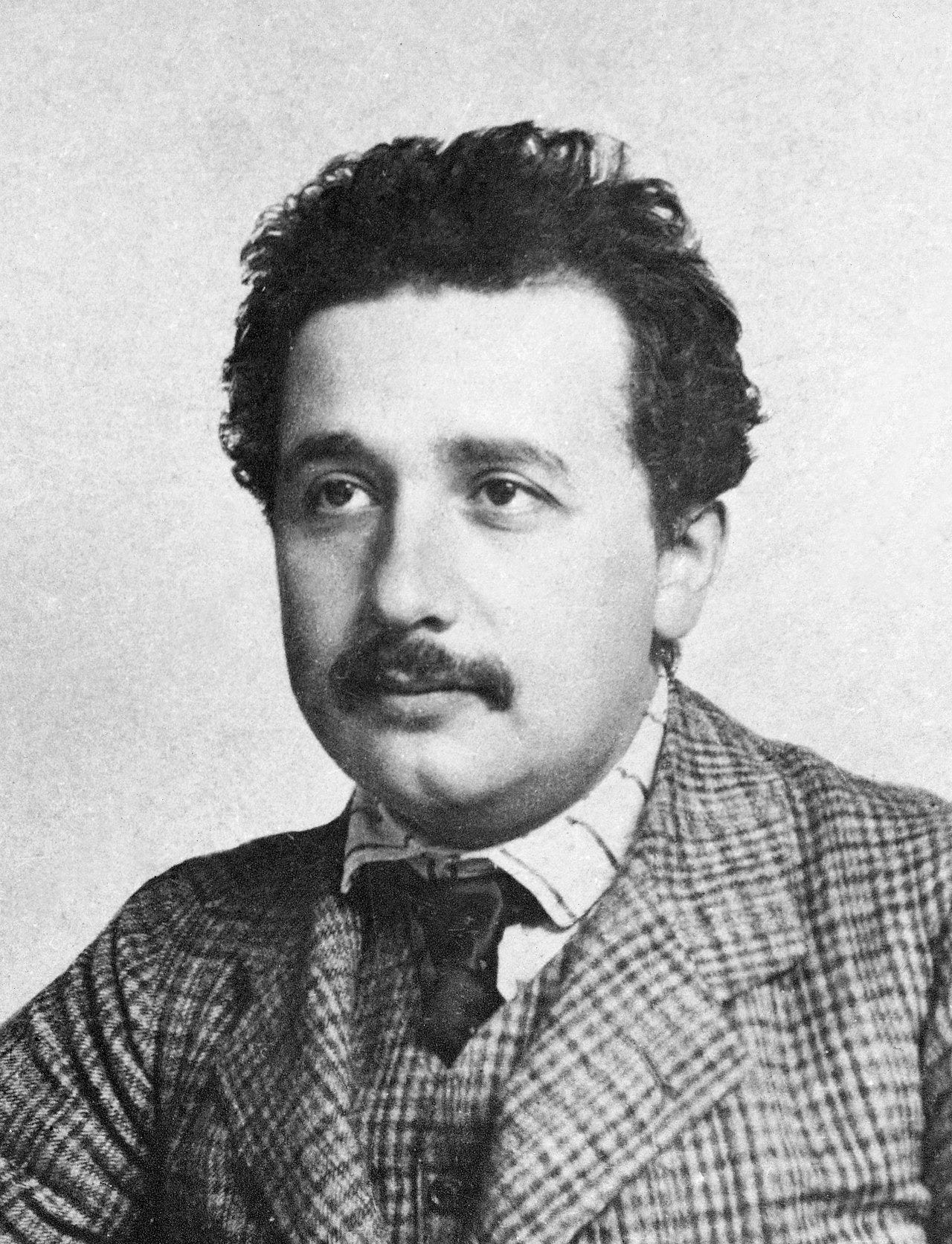
In a small office in Bern, Switzerland, a young man sat at a wooden desk, reviewing patent applications. He wasn’t a professor. He had no laboratory, no research funding, and no academic title. Yet within that quiet setting, he was carrying ideas that would overturn centuries of scientific thought.
In the span of one year — 1905 — Albert Einstein published four papers that changed everything we thought we knew about the universe.
This is the story of Einstein’s Annus Mirabilis — his Miracle Year.
Light as Particles 🌟 (March 1905)
For centuries, scientists believed light behaved only as a wave. But Einstein argued that light was made of tiny packets of energy, which he called quanta (now known as photons).
This explained the photoelectric effect — why light shining on metal could eject electrons. His bold proposal suggested that light wasn’t just a wave, but also had particle-like properties.
The idea was radical. It opened the door to quantum mechanics and earned Einstein the Nobel Prize in Physics (1921).
Atoms Are Real ⚛️ (May 1905)
At the turn of the 20th century, many still debated whether atoms actually existed or were just a convenient theory. Einstein gave a clear, elegant proof.
He explained the jittery, random movement of pollen grains in water — known as Brownian motion. This seemingly small observation showed that the motion came from countless collisions with invisible molecules.
His work provided definitive evidence that atoms and molecules are real, anchoring modern chemistry and physics.
Special Relativity ⏳ (June 1905)
Einstein’s third paper of 1905 shattered long-held assumptions about space and time.
He proposed that:
The laws of physics are the same for all non-accelerating observers.
The speed of light is constant for everyone, no matter how fast you move.
The consequences were mind-bending:
Time slows down for fast-moving objects (time dilation).
Lengths contract in the direction of motion.
Simultaneity is relative — two events that seem simultaneous to one observer may not be for another.
In one stroke, space and time became woven into a single fabric: spacetime.
Mass = Energy 💥 (September 1905)
Einstein’s final paper of the year contained just one short equation:
E = mc²
It showed that mass and energy are interchangeable — two forms of the same thing. Even a tiny bit of mass could release an enormous amount of energy.
This principle explained the power of the sun, the promise of nuclear energy, and, decades later, the destructive force of atomic weapons.
Why 1905 Matters
In just twelve months, Einstein redefined the universe:
Light became quantum.
Atoms became undeniable.
Space and time became relative.
Mass and energy became equivalent.
Each paper alone was groundbreaking. Together, they laid the foundation of modern physics.
And it all began not in a laboratory or university lecture hall, but in the quiet office of a young patent clerk in Bern.
🌍 A True Miracle Year
We call it Einstein’s Annus Mirabilis — Miracle Year. But it was no miracle. It was the product of relentless curiosity, deep thought, and the courage to question everything.
In 1905, Einstein didn’t just publish scientific papers.
He rewrote our understanding of reality itself.
✍️ This is Episode 2 of the series 20th Century Breakthroughs.
Episode 1: The Day Humans Learned to Fly — The Wright Brothers (1903)
Follow Let’s Unfold X for more stories of the events, ideas, and discoveries that shaped our world.
Follow along on X for daily bite-sized threads: @LetsUnfoldX